Phosphoric acid is not a product you can afford to take lightly. It is corrosive, it is heavy, and it travels as a liquid, which means every step between the yard and the vessel matters. So instead of just telling you how we ship it, we decided to show you.
Behind every shipment there is a routine that rarely gets seen: how the totes are lined up, how they are checked and lifted, how they are loaded, and how they are secured before the container doors close. None of these steps make headlines, but together they decide whether the cargo arrives exactly as agreed. This is what that routine looks like for our phosphoric acid.
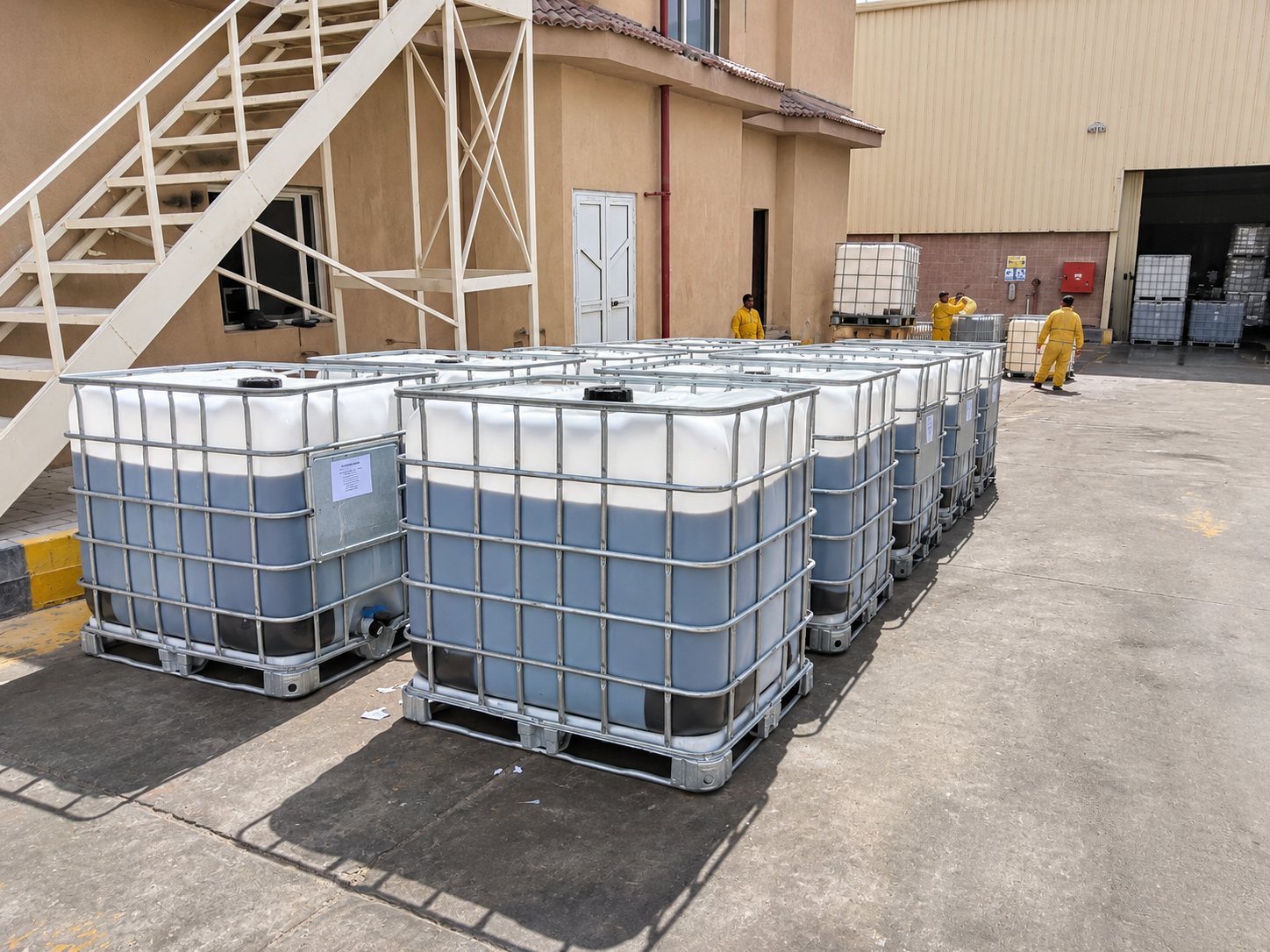
It begins in the yard, where IBC totes are lined up on their pallets, ready to move. Each tote is a sealed, steel-framed unit with its cap and valve in place.
That is the whole point of this packaging. The liquid stays contained, every unit can be counted and handled on its own, and the cargo can be moved in clean, predictable steps instead of improvised ones.
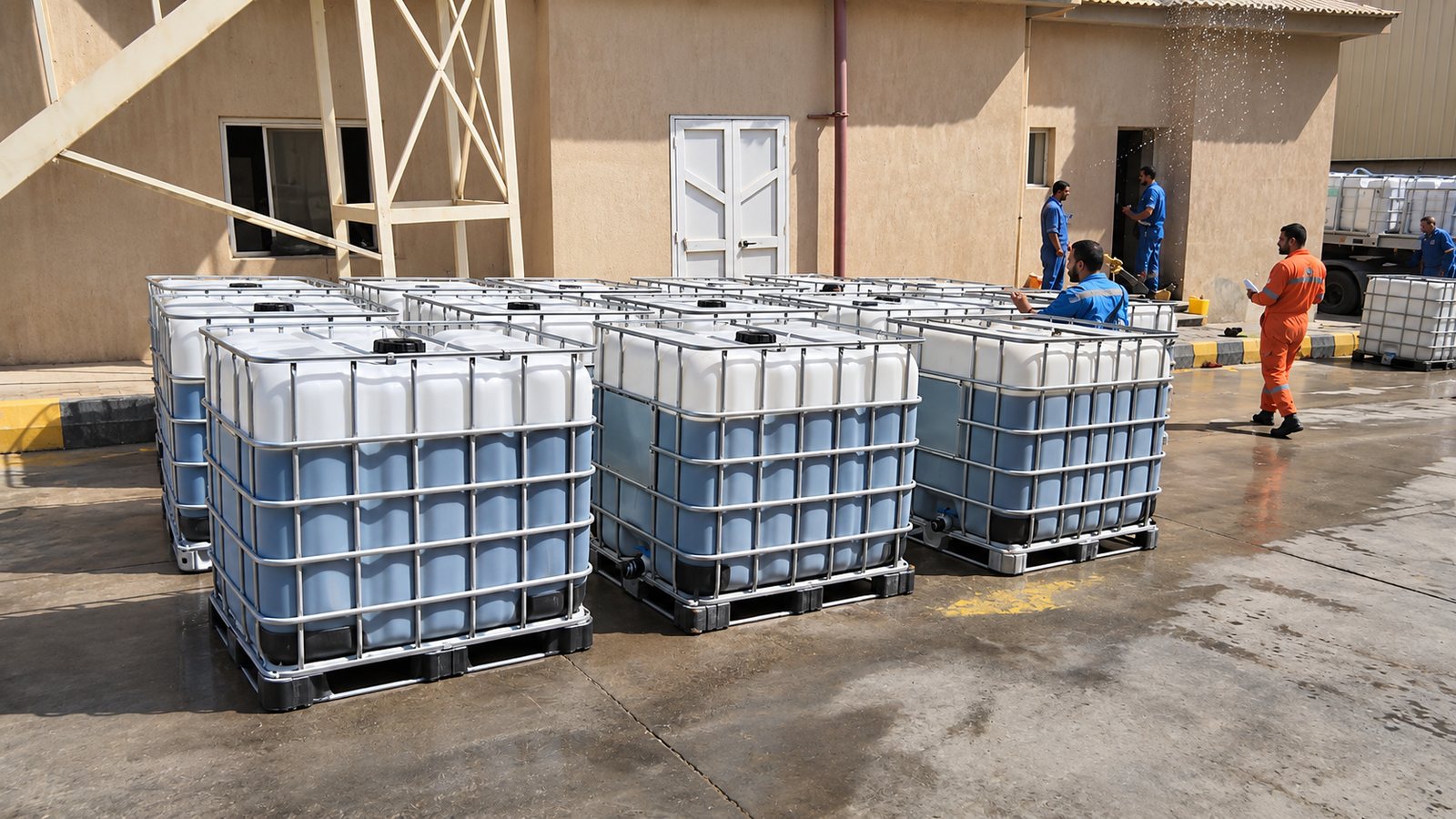
Before anything is lifted, people look at it. The crew on site goes through the totes and the paperwork, one unit at a time.
It is a simple routine, but it is the difference between a shipment that leaves clean and one that creates problems at the other end. With a product like phosphoric acid, a few minutes of attention on the ground save a lot of trouble later.
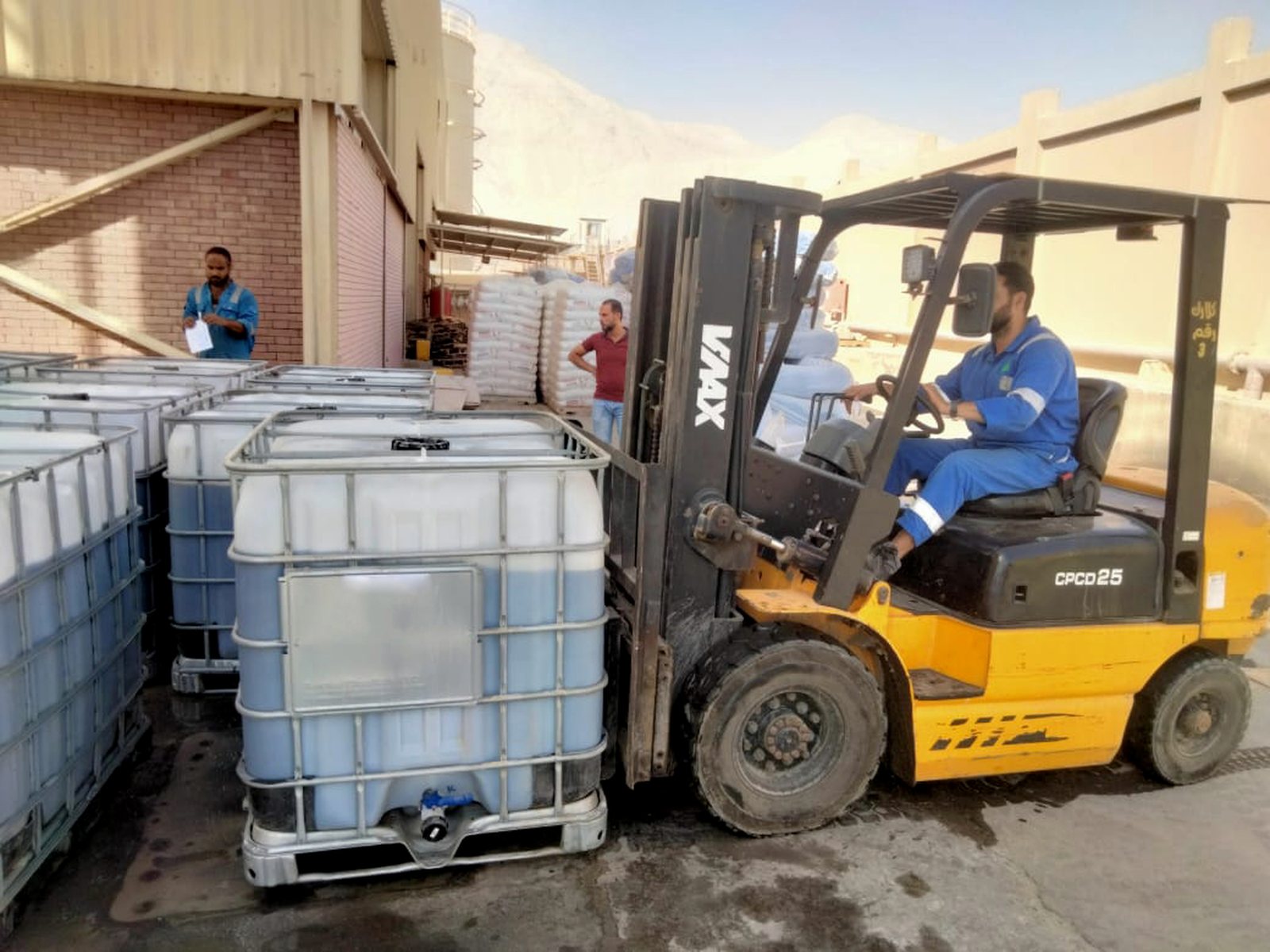
Then the forklift moves in. Each tote is picked up by its pallet base, squarely and without hurry, with the operator keeping the load low and steady.
With a liquid cargo, smooth movement is not a detail, it is a rule. Sudden braking, sharp turns or rough placement are exactly what good handling is meant to avoid.
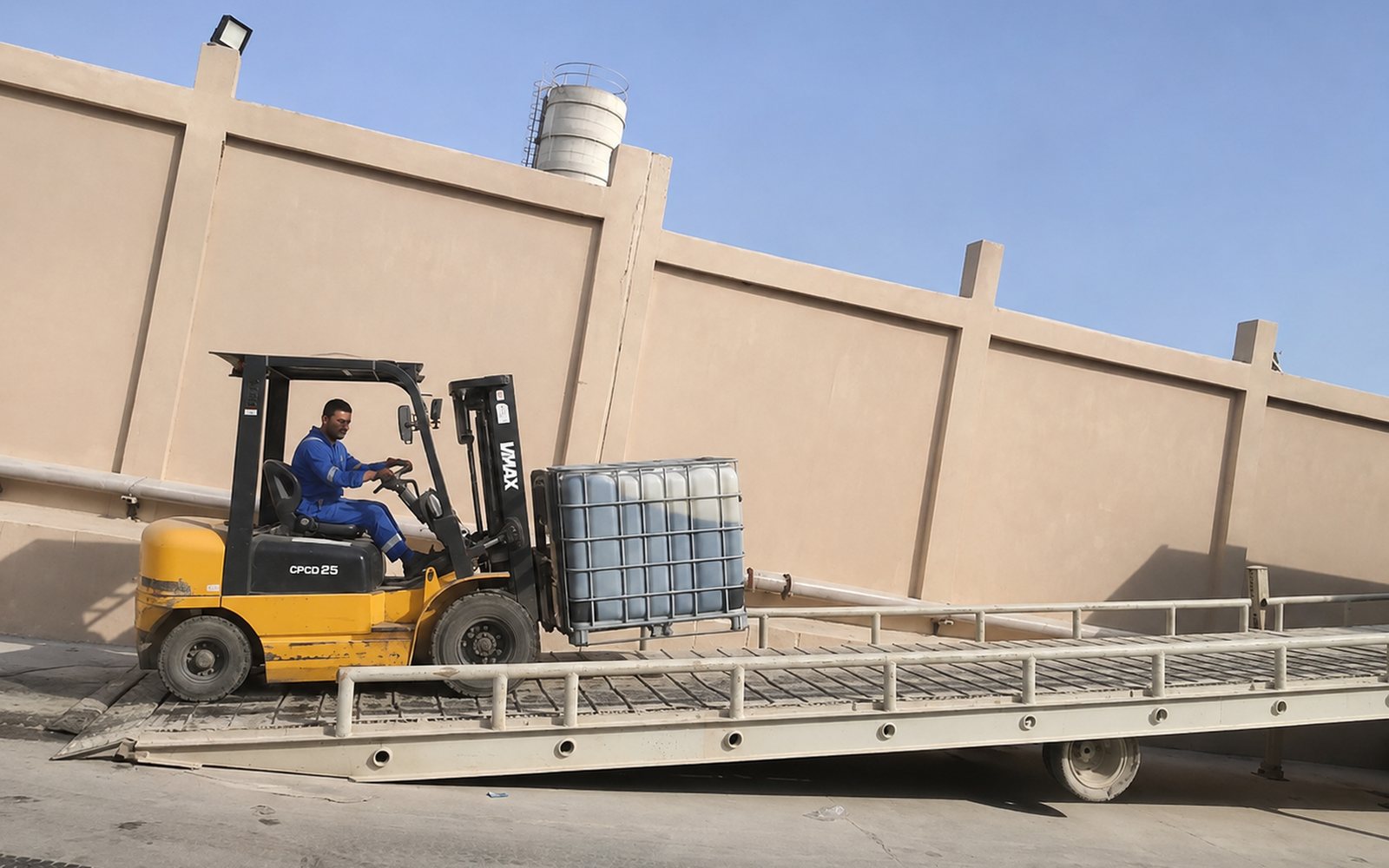
Even the loading ramp is part of the plan. The tote climbs at a controlled pace, balanced on the forks, on its way into the container.
Careful loading protects the product, the packaging and everyone working around it. It is a slow, deliberate part of the job, and it is meant to be.
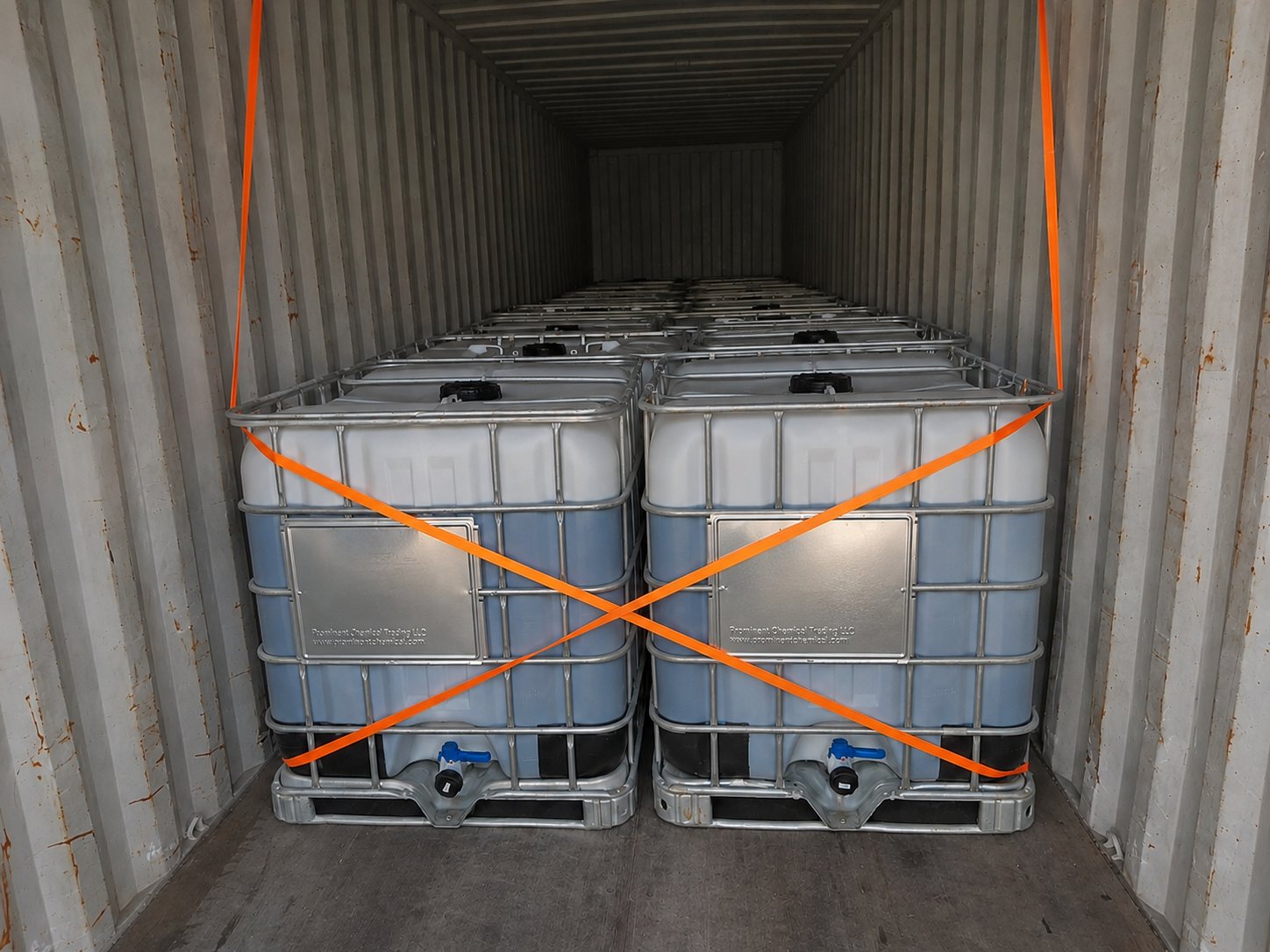
Inside the container, the totes are placed side by side and held with lashing straps in a cross pattern, so the load stays put when the container starts to move.
Liquid cargo shifts, and a loose load is a risk for the product and for the journey. Good lashing is as important as good packaging, which is why it is never left for the last minute.
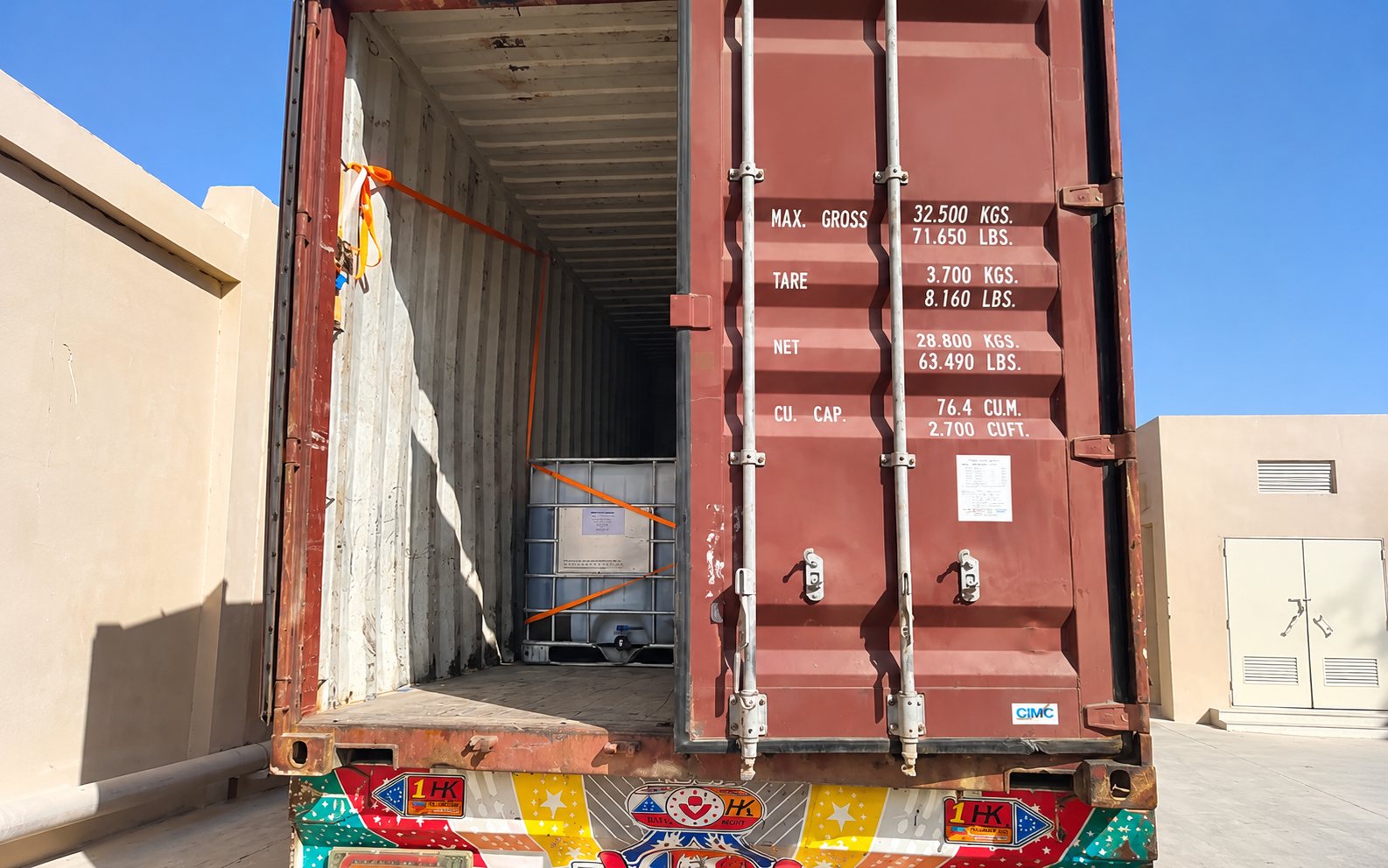
And finally, the container is ready to leave the site, loaded, secured and on its way to the port.
It is the last step of our work on the ground, and the first step of the journey to the buyer.
About the product
Alzak Phosphoric Acid (H3PO4) is an inorganic acid supplied as an olive-green liquid, with a purity of 72.08% H3PO4 (wt./wt.) and a total P2O5 content of 52.23%. It is an important raw material for phosphate-based fertilizers, and it is also used in industrial chemical manufacturing and in selected water treatment processes.
Technical specifications
| Product | Phosphoric Acid (H3PO4) |
|---|---|
| Appearance | Olive green liquid |
| Solubility | Soluble in water |
| Purity (as H3PO4, wt./wt.) | 72.08% |
| Total P2O5 (wet basis) | 52.23% |
| Density at 20°C | 1.300 to 1.700 g/cm³ |
| Packing | IBC totes |
| Applications | Fertilizer production, industrial chemical manufacturing, water treatment |
The full chemical composition is available in our Technical Data Sheet (TDS), and more details are on our Phosphoric Acid product page.
Why we show you this
A good supplier is not only the one with the right product and the right price. It is the one who stays close to the cargo, takes responsibility for how it is packed and loaded, and is not afraid to show it. We believe that transparency builds the kind of trust that lasts longer than any single shipment.
We don't just trade commodities. We stay close to them until they leave.
From Dubai, Alzak supplies fertilizers, industrial minerals, cement, polymers and grains to buyers around the world. Looking for phosphoric acid in IBC totes? Reach us at info@alzak.com.